

AGROTOURCARE / KNOWLEDGE HUB
ECO PARKS
Nature protected,
understood and shared with care.
An enduring guide to the landscapes that protect life: how eco parks work, why biodiversity matters, and how every visit can leave room for nature to thrive.
Start readingAn AGROTOURCARE editorial guide to responsible nature-based travel
Updated July 2026 · 28 minute read
A living public trust
Protected places do more than preserve a view.
An eco park can begin with something simple: a marsh where floodwater can spread safely, a forest edge where birds still find food, a restored riverbank where children can watch dragonflies. Yet the work behind a healthy protected landscape is rarely simple. It involves ecological knowledge, long-term care, clear boundaries, local livelihoods, public access and the patience to let natural processes do their work.
This guide looks beyond the idea of a scenic stop. It explains eco parks as places of stewardship: landscapes where protection and learning meet. Whether you are planning a visit, teaching a class, deciding where to direct your support or simply wondering why a path may be closed, the goal is the same: to make the natural world easier to understand and easier to respect.
01 / First principles
What Is an Eco Park?
An eco park is a place where nature is given a practical chance to persist, recover and be understood. It is not defined by a single international legal category. It is defined by the relationship it tries to build between ecological protection, public learning and responsible access.
In one country, an eco park may be a coastal wetland managed by a municipality. In another, it may be a community-run forest, a rehabilitated industrial site, an urban biodiversity corridor or a privately protected landscape open to guided visits. Some are large enough to contain whole watersheds; others are modest but strategically placed habitats that connect a city to a river, a forest or an agricultural landscape. Their settings differ, but their strongest versions share a commitment to ecological integrity rather than decoration.
That distinction matters. A place can have trees, trails and attractive signs without functioning as an eco park in the deeper sense. A genuine conservation-minded site asks what the land needs: which species depend on it, how water moves through it, where people can walk without causing harm, which cultural histories belong to it and what resources will keep care going year after year. Visitor facilities are then designed around those answers, not the other way around.
Protect
Secure habitats, species and ecological processes that may be under pressure beyond the boundary.
Restore
Repair damaged soils, waterways, native vegetation and wildlife connections where recovery is possible.
Interpret
Help people read the landscape through trails, guides, research and inclusive education.
Belong
Build a lasting relationship with nearby communities, whose knowledge is part of conservation.
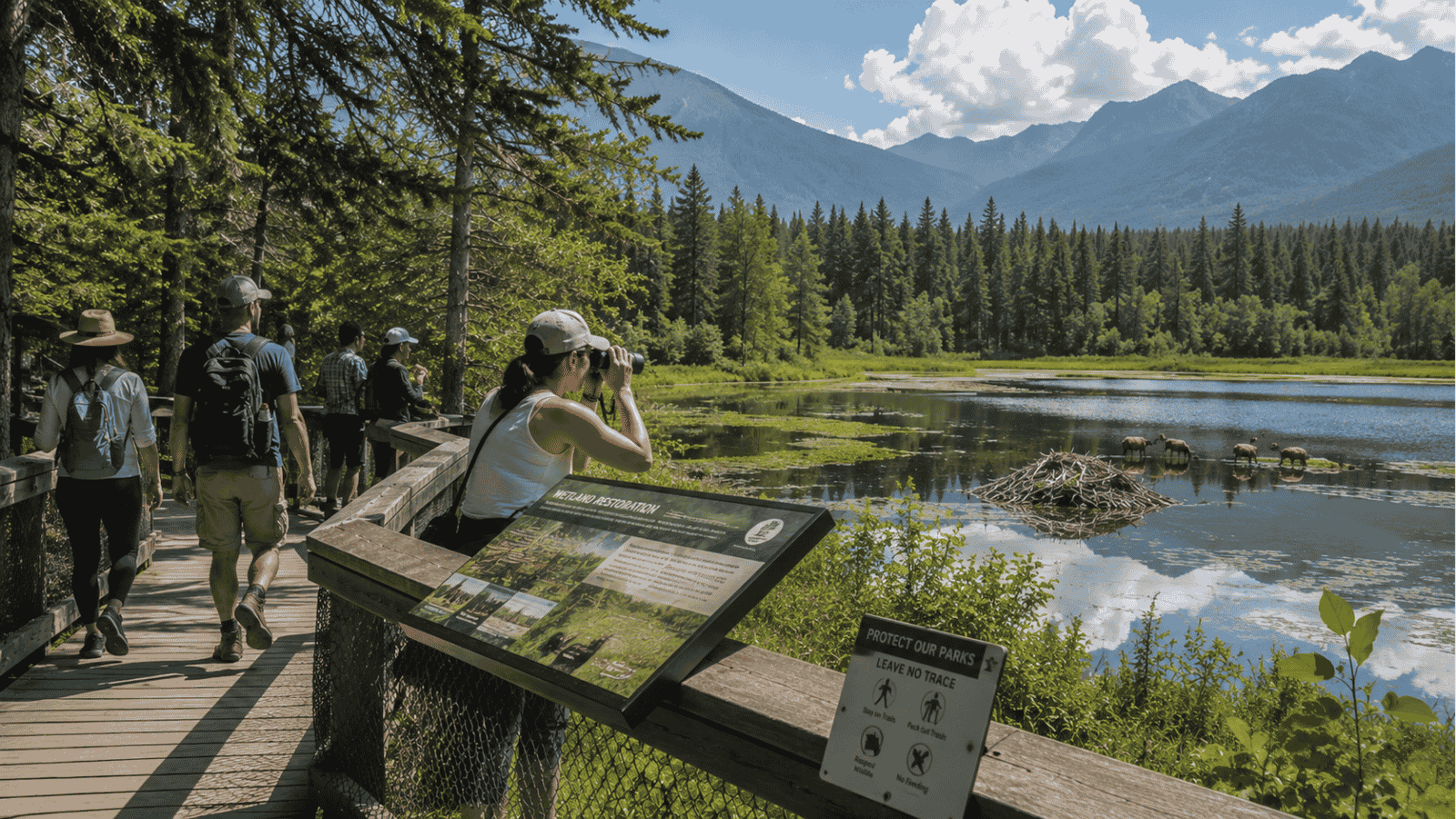
The word eco should signal more than low-impact branding. It should point to ecology: the web of relationships among organisms, land, water, climate and people. When an eco park works well, a visitor does not need to know every species name to sense that relationship. A boardwalk keeps feet off fragile ground. A viewing platform holds a respectful distance. A ranger explains why silence matters near a nest. These are small design choices with an ethical direction.
02 / The wider purpose
Why Eco Parks Exist
Eco parks exist because healthy ecosystems need space, continuity and attentive care, especially in a world where land and water are under increasing pressure.
Farms, towns, roads, ports and expanding cities all make legitimate demands on land. But when natural areas are repeatedly reduced, divided or degraded, the effects do not stop at a boundary line. Pollinators lose feeding routes. Floodwater has fewer places to settle. Birds and mammals struggle to move between seasonal habitats. Soil loses organic matter. Heat intensifies where tree cover disappears. An eco park can protect one part of this living system and, just as importantly, show why the system matters beyond the park itself.
Many parks were created in response to visible loss: a shrinking wetland, a threatened nesting site, a forest cut off by development or a river made unsafe by pollution. Others are proactive, reserving room for life before damage becomes difficult to reverse. In either case, protection is not a claim that a landscape will remain unchanged. Nature changes continually. The aim is to maintain the conditions that allow species and processes to adapt without being overwhelmed by avoidable disturbance.
"A protected landscape is not separate from daily life. It filters water, moderates heat, stores carbon, carries memory and makes the idea of a shared future more tangible.
Eco parks also exist for public understanding. People are more likely to care for what they can encounter with context. A child who sees a frog in a restored pond, a resident who learns how a salt marsh softens storm surge or a traveler who understands a seasonal trail closure gains more than a photograph. They gain a practical story about interdependence. That story can shape decisions at home, at school, in business and in local government.
This is why responsible access matters. Parks that welcome people without limits can unintentionally damage the things they protect. Parks that shut people out completely may lose public support and educational value. The most thoughtful sites manage this balance through zoning, timed entry, guided routes, seasonal closures and honest explanation. They are not offering nature as a product. They are making a careful invitation to participate in its protection.
03 / Different tools, shared values
Eco Parks vs National Parks vs Botanical Gardens vs Nature Reserves
These names can overlap, and none is a universal guarantee of quality. Understanding the differences helps visitors read a place on its own terms and follow the rules that give its conservation work meaning.
A national park is commonly a large, legally protected area established by a national government. It may contain mountains, forest, coast, rivers, cultural sites and communities, and often has a formal mandate to conserve natural heritage while enabling public enjoyment. An eco park can be much smaller and may be managed by a city, a community organization, a foundation or a local partnership. It often places particular emphasis on interpretation, restoration and lower-impact public engagement.
| Landscape type | Typical focus | Visitor experience | Question to ask |
|---|---|---|---|
| Eco park | Ecological protection, restoration and learning, often at a local or regional scale. | Interpretive trails, guided walks, carefully managed access. | How does this site protect and explain its ecology? |
| National park | Large-scale protection of outstanding natural and sometimes cultural landscapes. | From remote backcountry to developed visitor areas. | What legal rules, permits and zones apply here? |
| Botanical garden | Documented plant collections, horticulture, research and education. | Designed paths and labeled collections, often near cities. | Is the focus on living collections, wild habitat or both? |
| Nature reserve | Protection of a particular habitat, species or ecological process. | Often limited, seasonal or permit-only access. | Which sensitive features are protected, and why? |
Botanical gardens deserve special attention because they are sometimes mistaken for eco parks and sometimes work alongside them. A good botanical garden may conserve threatened plants, maintain seed collections, support taxonomy, educate the public and offer refuge for urban wildlife. Its plantings can be carefully arranged rather than naturally occurring, while an eco park may prioritize a self-sustaining local habitat. Both have important roles. A garden can teach visitors to recognize plant diversity; a wetland eco park can show how plants, water, soil and animals function together in place.
Nature reserves may have the strictest rules of all. Some protect a nesting colony, a rare orchid meadow or an undisturbed forest fragment where regular visitor access would be inappropriate. A closed gate is not an absence of welcome. It may be the most direct way to protect a vulnerable species. When planning a trip through our responsible travel planning guidance, treat the official designation as the beginning of your research, not the end.
04 / The fabric of life
Biodiversity Explained
Biodiversity is the variety of life, from genes within a species to the species in a place and the ecosystems they form together. It is not a background detail. It is the living fabric that makes landscapes resilient, productive and recognizable.
At the most familiar level, biodiversity means the range of plants, animals, fungi and microorganisms around us. A grassland with flowering plants, beetles, grazing animals, soil fungi and birds is more biologically varied than a single-species lawn. But diversity is also genetic. A species with varied genetic traits may be better able to cope with disease, drought or changing temperatures. It is also ecological: a mosaic of woodland, meadow, stream and wetland supports different forms of life and the movement between them.
Genes
Variation within living populations supports adaptation.
Species
Different organisms fill different roles in a food web.
Ecosystems
Habitats interact across land, water and seasons.
Every species is not equally visible, and visibility is not the same as importance. Fungi decompose fallen wood. Insects pollinate crops and wildflowers. Wetland plants slow water and trap sediment. Predators can shape the behavior and number of other animals. Microorganisms help cycle nutrients through soil and water. An eco park helps make these relationships legible. Its value is not measured only by flagship animals, but by the integrity of the whole network, including its quieter members.
Biodiversity can make an ecosystem more able to absorb shocks, though it does not make any place invulnerable. A diverse wetland may store water through dry spells; a varied forest structure may offer different refuges during heat; a connected landscape may give species routes to shift their ranges. These are reasons to protect common habitats as well as rare ones. Waiting until a species is close to disappearance is a costly and uncertain strategy.
For travelers, biodiversity begins with attention. Notice the layers of a forest, the changing soundscape near water, the difference between a cultivated display and a living habitat. Ask a guide which species are indicators of health and which are under pressure. These observations turn a visit from consumption into learning, and they connect naturally with broader travel intelligence about the places we enter.
05 / Keeping systems whole
Ecosystems & Habitat Conservation
Habitat is more than a location on a map. It is the set of conditions an organism needs to feed, shelter, reproduce and move through its life cycle. Conserving habitat means protecting those conditions, not merely preserving a patch of green.
A streamside forest needs shade, stable banks, clean water, fallen branches, seasonal flooding and connections to the wider catchment. A coastal dune needs shifting sand, native vegetation, room for wind and tides, and protection from trampling. A meadow may need periodic mowing or grazing to stop it becoming dense scrub. Each ecosystem has its own rhythms, and management that helps one can harm another if it is applied without care.
Habitat fragmentation is one of the central challenges eco parks address. When roads, fences, buildings or intensive land uses divide a landscape, animals may be unable to reach food, mates, nesting areas or seasonal refuge. Small isolated populations can become more vulnerable over time. Ecological corridors, wildlife crossings, river buffers and stepping-stone habitats can reduce this isolation. They do not replace large intact areas, but they can make a wider landscape more permeable to life.
Protection
Setting aside intact habitat prevents avoidable loss. Boundaries, enforcement and community agreements can all be part of that work.
Restoration
Repairing a damaged ecosystem may involve removing barriers, replanting native species, restoring water flow or allowing natural regeneration.
Restoration requires humility. Planting trees is not automatically the right response, especially in natural grassland, peatland or open wetland. Removing an invasive plant may take years of follow-up. Reintroducing water to a drained site can alter neighboring land use. The question is not simply how quickly a place can look green. It is whether the right processes are returning and whether decisions are informed by local ecology, long-term monitoring and the people who live nearby.
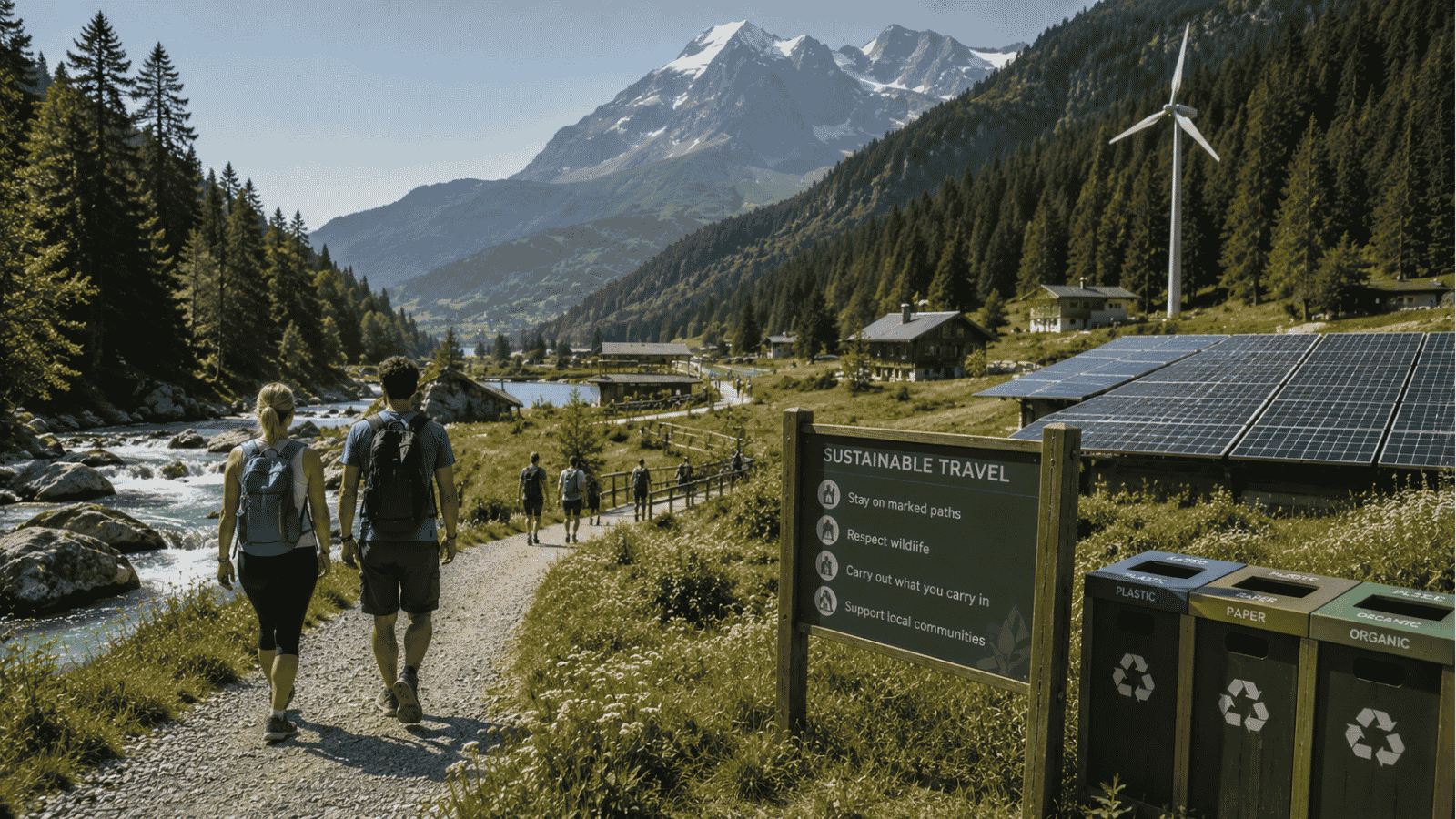
Visitors support habitat conservation first by staying where access is intended. A single shortcut can widen into a scar of compacted soil; repeated off-trail steps can damage ground-nesting birds, fungi, seedlings and cultural features that are easy to miss. The instruction to remain on a path is a practical agreement that concentrates human impact in a place designed to absorb it.
06 / Looking without taking
Wildlife Protection & Ethical Observation
Wildlife observation is most meaningful when the animal remains free to behave as it would without us. The distance between an extraordinary encounter and a harmful one is often measured in a few quiet choices.
Wild animals spend their energy finding food, caring for young, avoiding danger and coping with weather. When people approach too closely, block a route, make sudden noise or offer food, the animal has to respond. That response can cost energy, interrupt feeding, separate families or make an animal more vulnerable to predators and roads. Repeated disturbance can have effects long after the visitor has gone.
Ethical observation starts with distance, but it also includes time and expectation. Use binoculars, a telephoto lens or a guided viewing point rather than trying to close the gap. Never follow, surround, touch, feed or bait an animal. Do not play recorded calls to attract birds. Leave young animals where they are unless trained staff advise otherwise. If an animal changes its behavior because of you, you are too close. Step back quietly and give it the choice to move away.
Keep space
Let animal behavior determine the distance, not the desire for a close image.
Keep quiet
Lower voices, silence devices and allow the natural soundscape to remain intact.
Keep wild
Do not feed, handle, lure or share precise locations of vulnerable species.
Photography brings a further responsibility. A geotag can direct large numbers of people to a sensitive nest, den or plant population. Flash, drones and off-trail positioning can cause harm even when an image appears peaceful. Consider withholding exact locations for sensitive wildlife, especially during breeding seasons. Choose images that tell the truth about respectful distance and do not normalize unsafe behavior for the next visitor.
Ethical wildlife observation is also a matter of language. Avoid describing a wild animal as if it is performing for an audience. Park interpreters and guides can help visitors understand behavior without inventing human motives. This approach builds a more durable kind of wonder: not the thrill of possession, but the privilege of witnessing another life on its own terms.
07 / Travel within limits
Sustainable Tourism in Eco Parks
Sustainable tourism is not a label earned by visiting a natural place. It is a continuing effort to align travel with the ecological and social limits of the destination.
In an eco park, those limits may include the number of people a trail can hold before erosion increases, the hours when wildlife needs quiet, the amount of water a small community can spare, the capacity of local waste systems or the cultural protocols around a sacred landscape. Good tourism planning pays attention to these realities before promoting a visit. It does not treat every day, every route and every season as equally available.
A responsible visitor can support this approach through choices that may feel modest but add up: book where reservation systems are in place; arrive at quieter times; use shared or lower-impact transport when practical; carry reusable items; stay on designated routes; and choose guides or accommodation that employ people locally and explain their environmental practices clearly. Read our broader guide to thoughtful travel planning for ways to build these decisions into an itinerary from the beginning.
"The purpose of a visit is not to extract the maximum experience from a place. It is to encounter a place in a way that still leaves it capable of giving life tomorrow.
Money matters too, but spending is not automatically beneficial. Entrance fees, local guiding and community-owned services can help fund stewardship when revenue sharing is transparent and fair. At the same time, rapid tourism growth can raise living costs, strain infrastructure and shift decision-making away from residents. Look for operators that explain where fees go, honor local rules, limit group sizes and place conservation outcomes ahead of guaranteed wildlife sightings.
Travel also has climate costs, particularly over long distances. There is no perfect formula that makes every journey impact-free. The honest response is to travel less often but with more care when possible, stay longer, avoid unnecessary internal flights, choose efficient transport where feasible and make the visit itself meaningful enough to justify the resources it uses. Our reporting on destination guides helps readers look beyond a checklist and understand what a place asks of them.
08 / Learning in place
Environmental Education
Environmental education is not an extra feature at the edge of conservation. It is one of the ways conservation becomes durable, democratic and relevant to daily life.
A well-designed trail can teach without overwhelming. It may reveal why a dead tree is left standing, how a reed bed filters water or what a seasonal closure protects. A guide can connect a local species to a global pattern without making the place feel abstract. A school visit can turn a science concept into a memory of wind, soil, insects and questions. These experiences build ecological literacy: the ability to notice relationships, understand trade-offs and recognize that human well-being depends on healthy systems.
The strongest programs do not speak down to their audiences or present nature as a fixed museum display. They invite observation, uncertainty and dialogue. Why are fewer butterflies visible this year? Who has used this land over time? What does a river need after heavy rain? Such questions make room for scientific evidence, local knowledge and lived experience. They also help visitors see that stewardship is a practice, not a performance.
Start with direct observation: texture, sound, tracks, weather, season and change.
Link what is seen to wider systems of water, food, culture, climate and livelihoods.
Translate understanding into respectful behavior and informed choices beyond the park.
Education should also be accessible. Plain language, tactile materials, step-free routes, captions, quiet spaces, multilingual interpretation and varied ways of participating can make nature learning more inclusive. Not every visitor will walk the same trail or have the same prior knowledge. A park that welcomes different forms of attention creates more opportunities for people to form a genuine relationship with the place.
09 / Conservation with people
Community-Based Conservation
Conservation lasts when the people closest to a landscape have meaningful power, respected knowledge and a fair share in the benefits of protection.
Communities are not a single category. They include Indigenous peoples, long-term residents, farmers, fishers, landholders, local businesses, young people and others whose lives connect to a place in different ways. In many landscapes, traditional knowledge holds detailed understanding of seasonal patterns, species behavior, water sources and land management practices. Respecting that knowledge is not a gesture. It can improve decisions, strengthen trust and correct the false idea that conservation begins only when an outside institution arrives.
Community-based conservation may take many forms: locally managed forests, co-governed protected areas, community rangers, benefit-sharing agreements, restoration employment, cultural interpretation or local stewardship groups. None is automatically fair or successful. The essential questions are who decides, who is heard, who bears restrictions, who receives income and whether people can challenge decisions that affect their homes and futures.
Visitors have a role in this picture. Choose locally rooted guides when appropriate. Learn the names and histories of places as communities use them. Follow cultural protocols around photography, access and sacred sites. Spend in ways that do not bypass local businesses. Avoid treating residents as scenery or assuming that a traveler's idea of wilderness is the only valid one. For additional perspective on traveling with cultural awareness, explore our culture and place guidance.
At its best, community-based conservation recognizes that social justice and ecological health are connected. If people lack secure livelihoods, access to decision-making or respect for their rights, conservation rules may be experienced as pressure rather than partnership. When care for land supports dignity, skills, livelihood and local agency, a park becomes part of a living community rather than an island set apart from it.

10 / A changing baseline
Climate Change & Protected Areas
Protected areas are essential climate allies, but they are not sheltered from climate change simply because they have a boundary on a map.
Rising temperatures, altered rainfall, more frequent heatwaves, changing fire conditions, sea-level rise and stronger storms can reshape a landscape faster than many species can adapt. Flowers may bloom before their pollinators emerge. Birds may arrive after peak food availability. Coral reefs may bleach during marine heatwaves. Wetlands may dry, while other areas face intense floods. These changes can interact with pollution, habitat fragmentation, overuse and invasive species, making management more complex.
Eco parks can contribute to climate resilience in several ways. Forests, grasslands, wetlands and soils store carbon when they are healthy, though the amount varies by ecosystem and cannot substitute for reducing emissions. Wetlands can retain floodwater. Tree cover can moderate local heat. Coastal habitats can reduce wave energy. Connected habitats can give species room to move as local conditions shift. The greatest value often comes from protecting entire systems rather than focusing on a single visible feature.
Adaptation requires active learning. Park managers may monitor water levels, change mowing schedules, restore shade along streams, plan for wildfire, control invasive species or adjust visitor routes to protect stressed areas. Some choices are difficult because there may be no historical baseline to return to. The task is not to freeze nature in an imagined past, but to keep ecological options open in an uncertain future.
Travelers can engage with this reality without falling into despair. Pay attention to the park's own climate story. Ask how weather has changed and how the site is responding. Make transport and consumption choices that reduce avoidable emissions. Support policies and organizations that protect connected landscapes. Climate action includes the trees, water, food systems and public spaces that shape the health of every community.
11 / Before you go
Planning an Eco Park Visit
A considerate visit begins before the journey. The better prepared you are, the less likely you are to create pressure, miss important rules or depend on a fragile landscape to absorb an avoidable mistake.
Start with the official source for the park or managing organization. Check opening hours, seasonal closures, weather alerts, permits, trail conditions, accessibility information, transport options and waste facilities. Find out whether you need to reserve a time slot or hire a guide. Some places use limits to protect habitats; arriving without a booking may mean you cannot enter, and that is a rule worth respecting rather than trying to work around.
Before departure
Read the rules, reserve if required, choose the least disruptive route and pack reusable essentials.
On arrival
Study local guidance, assess the weather, share trails fairly and set a pace suited to the group.
After the visit
Take all waste home, avoid sharing sensitive locations and reflect on what the landscape taught you.
Pack for self-reliance, not excess. Water, weather protection, appropriate footwear, a basic first-aid kit and downloaded maps can reduce pressure on small visitor facilities. In remote or hot environments, be realistic about skills, daylight and fitness. Do not count on mobile signal. Let someone know your route. Our practical travel safety resources can help you prepare without confusing preparedness with permission to take unnecessary risks.
Good planning also protects your capacity to enjoy the day. Rather than trying to cover every trail, choose one area and allow time to observe. Sit quietly. Notice how a habitat changes from edge to interior. Talk with a ranger or guide if one is available. A slower visit often leaves a deeper understanding than a hurried attempt to collect every viewpoint.
12 / A shared agreement
Eco Travel Etiquette
Etiquette in a protected landscape is not about appearing knowledgeable. It is a shared practice of making enough room for wildlife, other people and the place itself.
Follow the local rule
Rules reflect conditions on the ground. A restriction that seems small may protect a nesting season or recovery area.
Stay on durable surfaces
Use designated trails, boardwalks and viewing points. Do not create a new route around mud or a closed gate.
Leave what belongs
Plants, stones, feathers and driftwood may be habitat, food, evidence or part of a cultural landscape.
Carry the impact out
Take litter, food scraps and disposable items with you. Waste systems in remote parks can be limited.
Share quiet generously
Keep sound low, yield with courtesy and remember that others may be seeking rest or study.
Let conditions decide
Turn back when weather, trail conditions or local guidance says to. Flexibility is good judgment.
These principles apply whether you are in a nearby city wetland or a remote coastal reserve. They make travel less extractive and more attentive. They also protect the calm that allows people to recover from the sensory intensity of daily life. For a wider look at rest, nature and mindful travel, visit our travel wellness editorial collection.
13 / A global practice
Eco Parks Around the World
Eco parks take shape from the lands and communities around them. There is no single model to copy, and the most useful comparisons are about approaches rather than rankings.
In dense cities, eco parks may restore rivers, protect urban wetlands and create habitat corridors through neighborhoods. Their work shows that biodiversity is not confined to remote regions. In agricultural landscapes, parks may protect hedgerows, floodplains, grasslands and pollinator routes while working alongside farming communities. Along coasts, protected areas may focus on dunes, mangroves, seagrass, nesting beaches or estuaries where freshwater and saltwater meet.
Forest eco parks can safeguard old trees, understory plants, fungi, streams and wildlife movement across larger areas. Dryland parks may protect seasonal water sources and fragile soils shaped by wind and drought. Mountain landscapes often require care for steep trails, alpine vegetation and watersheds that serve communities far below. Island ecosystems may face the particular challenge of invasive species and limited space for wildlife to move. Each context calls for different management, knowledge and visitor restraint.
This diversity is why responsible destination research matters. Instead of asking only which site is most famous, ask what kind of ecosystem you are entering, who manages it and what pressures it faces. A small community wetland may offer a more meaningful lesson than a celebrated landmark if you arrive ready to understand its purpose. Our destination guides are intended to support that kind of inquiry: specific enough to be useful, but grounded in respect for local context.
Across all settings, one pattern remains clear. Protected areas work best when they are not isolated showcases. They need connected landscapes, sound science, dependable funding, accountable governance and public support. An eco park is both a particular place and a reminder that the future of nature is decided across whole regions, including the ordinary spaces between protected boundaries.

14 / Learning across generations
Families, Schools & Educational Visits
Eco parks can be among the most generous classrooms available: open-ended, sensory and full of questions that no worksheet can completely contain.
For families, the aim is not to make every moment instructional. Let children set the pace sometimes. Invite them to listen for three different bird calls, look for evidence of water movement or compare the coolness of shade and open ground. Bring a notebook, simple field guide or magnifying lens only if it adds to the experience rather than turning it into a task. The most important lesson may be that careful attention is enjoyable.
Schools can use eco parks to connect science, geography, history, art, language and civic learning. A visit might explore food webs, water quality, land use, local stories, seasonal change or the ethics of public access. Preparation is essential: check accessibility, group size requirements, safeguarding procedures, toilets, weather contingencies and whether a ranger-led program is available. Set clear behavior expectations, especially around trail boundaries, noise and collecting natural materials.
Inclusive learning can take many forms. Some learners may contribute by sketching, photographing, recording sounds, mapping a route, translating signs, noticing textures or asking questions from a viewing area. Build in rest time and choices. Avoid presenting a single correct way to connect with nature. An accessible park experience makes space for different bodies, senses and cultural relationships with the outdoors.
Follow up after the visit. Compare observations over seasons, research one species encountered, make a local habitat improvement plan or write to a park manager with a thoughtful question. This helps turn a memorable day into a thread of continuing care. Environmental understanding grows through repeated contact, reflection and action, not from one impressive outing alone.
15 / Attention as evidence
Scientific Research & Citizen Science
Eco parks are living laboratories, but research in them must be as careful as the conservation work itself. Good evidence helps managers understand what is changing, which interventions work and where attention is needed next.
Scientists may study population trends, water quality, soil health, pollination, invasive species, carbon storage, migration, visitor impacts or the effectiveness of restoration methods. Long-term records are especially valuable because ecosystems rarely reveal their patterns in a single season. Repeated observations can show whether a bird is arriving earlier, whether a restored wetland is holding water or whether a trail redesign has reduced erosion.
Citizen science extends some of this work through structured public participation. A visitor may record a butterfly, submit a photograph of a flowering plant, count birds at a fixed point or help identify litter after a storm. These contributions can be powerful when projects provide clear instructions, verify records and protect sensitive data. They are not a replacement for professional research, but they can broaden the reach of monitoring and help people understand how evidence is built.
Participation should never override wildlife welfare. Do not enter closed areas to document a species. Do not crowd an animal for a better photograph. Follow a project's advice about location sharing, especially for rare orchids, nesting birds or vulnerable mammals. The best citizen science teaches that data quality and ethical care belong together.
If there is no formal project at a site, you can still practice scientific attention. Keep a dated field journal, notice weather and seasonal conditions, ask a ranger how monitoring works and learn to distinguish observation from assumption. Curiosity becomes more useful when it is patient, specific and willing to be corrected.
16 / Practical answers
Frequently Asked Questions
Clear answers for planning, learning and moving through protected landscapes with care.
01What is an eco park?
An eco park is a managed natural area designed to protect ecosystems while helping people understand and experience them responsibly. The term is used in different ways, so an eco park may be a restored wetland, coastal reserve, forest learning landscape, habitat corridor or public conservation site. What matters is its purpose: nature protection, environmental education, careful visitor management and, where possible, benefits for nearby communities.
02Are eco parks the same as national parks?
Not necessarily. National parks are usually legally designated protected areas with a government-defined mandate and often much larger boundaries. Eco parks can operate at many scales and under public, community, charitable or private stewardship. Both may protect biodiversity and welcome visitors, but their laws, governance, permitted activities and conservation priorities can be very different. Read local guidance rather than assuming a familiar label means identical rules.
03Why are eco parks important for biodiversity?
Eco parks retain habitat, protect breeding and feeding areas, connect fragmented landscapes and reduce pressures on wildlife. They can safeguard common species as well as rare ones while keeping ecological processes such as pollination, seed dispersal, nutrient cycling and water filtration functioning. Their value grows when they are connected to other protected areas, working farms, rivers and community-managed land instead of treated as isolated islands.
04Can visitors see wild animals in an eco park?
Sometimes, but seeing an animal is never the measure of a successful visit. Wild animals need space, quiet and predictable conditions. Observe from a respectful distance, use binoculars rather than approaching, keep voices low and never feed, touch or call to wildlife. A responsible visit may involve seeing tracks, hearing birds or learning why an area is temporarily closed instead of getting a close encounter.
05What should I wear and bring to an eco park?
Choose clothing suited to the weather, supportive footwear appropriate for the trail and a refillable water bottle. Bring layers, sun or rain protection, a small reusable bag for litter and any required permits. In insect-prone areas, follow local advice about protective clothing and repellent. Avoid strongly scented products, drones, portable speakers and anything likely to disturb animals or other visitors.
06Do entrance fees support conservation?
They can, but arrangements vary. Fees may contribute to trail maintenance, ranger salaries, habitat restoration, visitor facilities, local employment or wider conservation funds. Some sites are funded through taxes, donations or community agreements instead. A transparent park explains how money is used. Paying a legitimate fee, following booking limits and supporting locally owned services can help make conservation financially durable.
07What is the difference between conservation and preservation?
Preservation generally emphasizes keeping a place protected from use or alteration. Conservation is broader: it can include active management, restoration and carefully controlled human use so ecosystems remain healthy over time. A meadow may need grazing to retain its flowers; a wetland may need invasive species removal; a forest may need a quiet core plus a well-managed trail. Both approaches can be appropriate depending on the ecosystem.
08Are eco parks suitable for children?
Many are excellent places for children because direct, patient observation can build curiosity and care. Choose a route that suits the group, check accessibility and safety guidance, set simple expectations before arrival and give children a role such as noticing pollinators or recording seasonal change. The aim is not to turn every visit into a lesson, but to make room for questions, quiet attention and shared discovery.
09Can I bring a pet to an eco park?
Policies vary and should be checked before travel. Pets can stress wildlife, spread disease, disturb nesting birds and leave scent trails that alter animal behavior. Some parks allow dogs only on leads and on particular routes; others exclude pets entirely or seasonally. Respecting these rules protects wildlife and helps other visitors enjoy the site safely.
10How does climate change affect eco parks?
Climate change can alter rainfall, fire conditions, sea levels, temperatures, migration timing and the spread of pests and invasive species. A protected boundary does not stop heatwaves or storms. Parks need monitoring, ecological corridors, restored wetlands, native vegetation, emergency planning and long-term partnerships across the wider landscape. Visitors can help by reducing avoidable travel impacts and supporting organizations that invest in adaptation.
11What is citizen science in a protected area?
Citizen science is public participation in structured observation or data collection. Visitors may record bird sightings, photograph pollinators, report invasive plants, measure water clarity or help document seasonal change. Good projects provide clear methods, protect sensitive location data and explain how records are used. It is a useful way to turn careful noticing into information that can assist scientists and park managers.
12Why are some trails or viewing areas closed?
Closures are often a sign of responsible management, not poor service. A trail may be closed to protect nesting, allow habitat recovery, prevent erosion after heavy rain, reduce fire risk, keep visitors away from dangerous conditions or support scientific work. Following a closure avoids shifting pressure to vulnerable places and lets staff make decisions for the health of the whole ecosystem.
13How can I tell whether an eco experience is responsible?
Look for clear conservation goals, honest information about wildlife welfare, qualified local guides, small and appropriate group sizes, straightforward rules and a willingness to say no to harmful activities. Be cautious of experiences that promise guaranteed close wildlife contact, permit feeding or handling, use distressing restraints, ignore seasonal closures or hide where fees go. Responsible operators put the animals and landscape ahead of a photograph.
14What can I do after I return home?
Keep the learning active. Share accurate information, support local conservation work where you live, make nature-friendly choices in gardens and public spaces, and use your travel experiences to ask better questions of future trips. Eco parks are reminders that stewardship is not something that happens only in remote places. The habits of attention, restraint and care belong in everyday life too.