

Global Destination Intelligence Library
Understand The Place Before You Ever Arrive.
A destination is never only a location on a map. It is geography and weather, language and law, history and habit, hospitality and expectation — layered together and shaped over centuries. Travellers who take the time to understand those layers arrive differently. They ask better questions, avoid avoidable friction, spend their money where it matters, and see far more than the photographs promised. This library exists to teach you how to read a destination properly, long before you pack a bag.
The anatomy of destination intelligence
What Makes A Great Destination Guide?
Most destination content answers one question: what should I see? That is the least useful question you can ask. A guide worth reading answers a harder one — what do I need to understand about this place in order to move through it well? Eleven layers make up that understanding. Read them together and a destination stops being a list of sights and starts behaving like a place with logic you can follow.

History
History is not trivia for the plane ride. It explains why a border sits where it does, why two neighbourhoods feel like different countries, and why a monument is beloved in one town and resented in the next. Knowing the last hundred years of a place is often the difference between a respectful visitor and an oblivious one.
Geography
Mountains, coastlines, deltas and altitude decide how far you can travel in a day and how tired you will be when you arrive. A country that looks compact on a map may take twelve hours to cross. Geography quietly writes your itinerary before you do.
Climate and season
The same destination can be a different country in March and in August. Monsoon, dry season, shoulder season and high season change prices, crowds, road access and even which attractions are open. Season is usually the single highest-leverage decision you make.
People
Who lives here, and how do they actually spend a Tuesday? Demographics, working hours, religious observance and family structure shape when shops open, when streets fill and when a visitor is welcome to knock. Travel is easier when you move with the local rhythm instead of against it.
Language
Fluency is not the goal. Twenty words are. Greeting, thanking, apologising, asking for help and counting to ten will carry you further than any translation app, because they signal effort — and effort is almost always reciprocated.
Culture and etiquette
Every society encodes rules that its members never think to explain, because to them they are simply obvious. Shoes, photography, dress, greetings, tipping, queueing, eye contact. Learning them in advance is the cheapest form of respect available. Our cultural intelligence hub exists for exactly this.
Transport
How a place moves tells you how a place thinks. Rail-dense countries reward spontaneity; car-dependent ones punish it. Understanding the transport spine of a destination — and what it costs, and whether it runs on Sundays — determines how much of your trip you actually spend travelling.
Safety
Good safety information is specific, proportionate and unsentimental. It names the real risk — usually road traffic, petty theft or weather, rarely the dramatic one — and tells you what reduces it. Fear is not preparation. Read our travel safety guidance before you go.
Health
Altitude, water quality, vaccination requirements, insect-borne disease, pharmacy access and what a hospital visit costs a foreigner. Most travel illness is preventable and boring. Prepare with our travel wellness hub.
Environment
Fragile ecosystems, protected species, water scarcity and carrying capacity. Some of the world's most beautiful places are also its most vulnerable, and the visitor who understands why a trail is closed is the visitor who does not walk around the barrier.
Responsible travel
Where does your money land? Locally owned guesthouses, community guides and regional producers keep tourism revenue inside the destination. The alternative extracts it. Explore eco parks and botanical gardens to see conservation-first travel in practice.
Synthesis
The final layer is the one that matters. Any of these facts alone is trivia. Held together, they become judgement — the ability to look at an unfamiliar street and read it correctly. That is what travel intelligence means, and it is the only skill that transfers to every destination you will ever visit.
A guide should make you competent, not just informed
There is a simple test for any destination guide, including ours. After reading it, could you make a decision you could not make before? Could you choose a month, a region, a budget, a route — and explain why? If the answer is no, the guide was entertainment. If the answer is yes, it was intelligence.
“Facts describe a destination. Understanding lets you navigate one.”
Explore the world by region
Eight Regions. Hundreds Of Realities.
Regions are a starting point, never a conclusion. No continent travels as one, and treating a region as a single destination is the fastest way to arrive with the wrong expectations. Use these entry points to orient yourself, then descend into the country and city guides where the real detail lives.
Africa
Fifty-four countries, thousands of languages and a range of travel conditions so wide that generalisation becomes meaningless. Expect world-class conservation tourism, deep urban culture in cities that outgrew their guidebooks a decade ago, and infrastructure that varies dramatically by corridor.
Plan around: season, distance and regional visa arrangements.
Europe
Dense, well-connected and deceptively varied. Rail makes multi-country travel unusually easy, but the continent's popularity has made timing decisive — the same city in June and in October can feel like two different destinations.
Plan around: shoulder seasons, rail passes and overtourism pressure.
Asia
The most internally diverse region on earth: high-speed rail and remote highlands, megacities and monsoon islands, some of the world's cheapest travel and some of its most expensive. Sub-region matters more than continent here than almost anywhere.
Plan around: monsoon cycles, visa rules and internal flight networks.
North America
A region built at the scale of the car and the internal flight. Distances defeat the unprepared, national park systems reward the organised, and permit and reservation windows now open months ahead for the most popular landscapes.
Plan around: driving distances, park permits and seasonal closures.
South America
Altitude, Amazonia and Andes. This is a region where the map lies about time, where acclimatisation is a genuine itinerary constraint, and where overland travel is often the experience rather than the interval between experiences.
Plan around: altitude, wet seasons and long overland legs.
Oceania
Vast ocean distances, fragile island ecosystems and some of the strictest biosecurity rules on the planet. Island-hopping is rarely as casual as it looks; ferry and flight schedules quietly set the shape of a trip.
Plan around: biosecurity, cyclone season and inter-island transport.
Middle East
Ancient trade cities, extraordinary hospitality traditions and a climate that dictates the calendar. Summer heat is not an inconvenience but a planning constraint, and local customs around dress, alcohol and religious observance reward advance reading.
Plan around: summer heat, religious calendars and dress expectations.
Polar regions
The most tightly regulated travel on earth, and rightly so. Access is seasonal, operator-led and governed by conservation protocols. Preparation here is not optional and the environmental case for restraint is unusually strong.
Plan around: narrow seasons, operator regulation and strict conservation rules.
Regions orient you. Countries inform you. Cities change you.
Treat these eight entries as a compass rather than a destination. As new country, city, island and national park guides are published, they will slot beneath these regional headings — and each one will carry the same research standard, the same structure and the same commitment to reducing your uncertainty rather than inflating your expectations.
Countries, cities and regions
Zoom In Until The Destination Becomes Real
Travellers routinely research at the wrong altitude. They read about a country, book a city and then arrive in a neighbourhood — three different scales, three different sets of facts. Destination intelligence works by descending deliberately through six levels, each of which answers questions the level above cannot.
-
Country
The legal and logistical layer. Visas, entry requirements, currency, national holidays, health regulations and the broad safety picture. Country-level facts rarely tell you what a trip will feel like, but getting them wrong can end it before it starts.
Answers: may I enter, what will it cost, when should I come?
-
Region
Where climate and culture actually live. A single country can hold desert and rainforest, coast and highland, conservative province and liberal metropolis. Region is usually the level at which your itinerary genuinely takes shape.
Answers: which part of this country am I actually visiting?
-
State or province
The administrative layer that quietly governs your trip: park permits, alcohol rules, road tolls, regional transport authorities and local public holidays. It is the level travellers most often skip and most often regret skipping.
Answers: whose rules apply to me here?
-
City
The layer most guides begin and end with. Transport networks, districts, opening hours, safety patterns and the practical geography of a day. Cities are where a trip becomes concrete — and where costs are decided.
Answers: how do I move, eat and sleep here?
-
Neighbourhood
The single highest-return research you can do. Choosing the right district changes commute time, nightly cost, noise, safety and how much of the city you actually experience. Two hotels a mile apart can produce completely different trips.
Answers: where should I actually stay?
-
Local attractions
Last, not first. Once you understand the country, the region, the season, the city and the district, the question of what to see finally has enough context to be answered well — including which famous sight is genuinely worth the queue and which is not.
Answers: what deserves my limited time?
Why the order matters
Researching attractions before understanding the season is how travellers end up standing outside a closed national park in the rain. Researching a city before understanding the region is how they end up with six hours of daily transit they never budgeted for. The hierarchy is not bureaucracy. It is the order in which a destination reveals itself, and following it is what turns a booking into a plan. When you are ready to build that plan, our travel planning hub takes it from here.
“Book the country, choose the region, live in the neighbourhood.”
The evaluation checklist
How To Evaluate Any Destination — Sixteen Questions
Every destination on earth can be assessed with the same sixteen questions. The answers change completely; the questions never do. Work through them once and you will know more about a place than most people who have already booked a flight there.
Timing, cost and access
- Best time to visit. Not simply the warmest months — the months when weather, crowds, price and access align. Shoulder seasons frequently win on all four.
- Weather. Averages hide the truth. Look for rainfall patterns, humidity, daily temperature swing and extreme-event season, not just a headline number.
- Visa and entry. Check the requirement for your specific passport, the processing time, passport validity rules, onward-ticket requirements and any transit visa you might trigger en route.
- Transport. How you will cross the country, and how you will cross the city. Rail spine or internal flights? Metro or ride-hail? This decides both your budget and your daily rhythm.
- Budget. Build it from the bottom: accommodation, food, local transport, activities, insurance, and a contingency you genuinely intend not to spend.
- Currency. Cash or card culture, ATM availability, exchange rate volatility, card acceptance outside major cities, and whether tipping is expected, optional or offensive.
- Connectivity. Local SIM or eSIM, coverage outside urban areas, and whether the apps you depend on function locally. Many travellers discover the answer at the worst possible moment.
- Internet and remote work. Realistic speeds, reliability, power stability and whether a visa permits you to work at all.
Safety, wellbeing and fit
- Safety. Look for the specific and proportionate risk — usually roads, petty theft or weather — and what actually reduces it. Our safety hub goes deeper.
- Local customs. Dress, greetings, photography, religious observance, alcohol and the everyday courtesies you would want a visitor to your own home to know.
- Emergency services. The local emergency number, your embassy's location, and the realistic response time where you are actually going, which may not resemble the capital.
- Healthcare. Standard of care, cost to a foreigner, pharmacy access, vaccination and prophylaxis requirements, and whether your insurance is accepted or merely reimburses. Start with travel wellness.
- Accessibility. Step-free transport, pavement quality, lift availability and how far published accessibility claims match reality on the ground.
- Family friendliness. Child healthcare, food flexibility, travel distances between stops, and whether the destination's rhythm suits a small person's day.
- Solo suitability. Ease of moving alone, dining alone, arriving after dark, and the practical experience of solo travellers who share your profile — not solo travellers in general.
- Sustainability. Carrying capacity, water stress, whether tourism revenue reaches the community, and which operators are genuinely conservation-led rather than merely marketed that way.
Sixteen questions, one honest answer
Occasionally this checklist returns an inconvenient verdict: this destination, at this time of year, with this budget and these companions, is the wrong choice. That is not a failure of the research. That is the research working, and it is far cheaper to learn it now than on day three of a trip you have already paid for. The right destination for you is rarely the one with the best photographs. It is the one whose answers match your actual circumstances.
“The best trip you ever take may be the one you chose instead.”
The Destination Intelligence Framework™
Six Stages From Curiosity To Understanding
Every guide in this library follows the same path, because every well-researched journey does. The stages are sequential for a reason: each one supplies the raw material the next depends on.
Research
Gather the facts that do not change with mood or marketing: geography, season, entry rules, transport, currency. Prefer primary sources. Treat a photograph as an advertisement, not as evidence.
Destination Intelligence
Research → Understand → Prepare → Travel → Respect → Reflect. One loop, repeated for every destination you will ever visit.
Understand
Convert facts into meaning. Why is the dry season also the expensive season? Why does the north feel unlike the south? Understanding is what lets you predict a place rather than merely describe it.
Prepare
Documents, vaccinations, insurance, budget, packing, offline maps, twenty words of the language. Preparation converts understanding into readiness — and quietly removes most of the friction a trip can generate.
Travel
Arrive and let the plan flex. A good itinerary is a hypothesis, not a contract. The prepared traveller can improvise safely, because they know which parts of the plan are load-bearing and which are optional.
Respect
Follow the local rules, including the unwritten ones. Spend where it matters. Ask before photographing. Leave the trail as you found it. Respect is not an accessory to good travel; it is the evidence of it.
Reflect
Record what you got wrong, not just what you enjoyed. Reflection is what compounds a single trip into genuine travel judgement — the kind that makes the next destination easier to read.
“Research tells you what is there. Reflection tells you what you missed.”
The Destination Intelligence Framework™ sits beneath every guide we publish and connects directly to the wider Global Travel Intelligence Framework™, which extends the same discipline across planning, wellness, culture, safety and sustainability.
Travel styles
The Same Destination Is Ten Different Places
A city is not one destination. It is a different destination for a family with a toddler, a solo traveller arriving at midnight, a wheelchair user, a remote worker with a deadline and a birdwatcher chasing a migration window. Read every guide through the lens of how you actually travel.
Shorter distances, slower days
The constraint is rarely money — it is transit time, meal flexibility and healthcare access. Families travel best when the itinerary is halved and the base is fixed. Choose one good neighbourhood over three mediocre cities.
Arrival, autonomy and margin
The two decisions that matter most are when you arrive and where you sleep the first night. Everything else is recoverable. Build margin into the first twenty-four hours and the rest of a solo trip tends to look after itself.
Preparation is the adventure
Altitude, permits, weather windows, insurance that actually covers what you plan to do, and honest assessment of your own fitness. The most exhilarating trips are usually the most methodically prepared.
Comfort is not the same as insulation
Premium travel works best when it buys access, expertise and time rather than distance from the destination. The finest guides, the earliest entry and the quietest hours are worth far more than the marble.
Time is the currency you spend
Low-cost travel trades money for time, patience and research. Shoulder seasons, overland transport, local markets and longer stays in fewer places do more for a budget than any coupon.
Fewer flights, longer stays
The environmental maths of travel is dominated by transport and duration. Stay longer, move less, choose operators with verifiable conservation records, and start with our eco parks and botanical gardens guides.
Context before consumption
Read the history, learn the greeting, understand the festival before you attend it. Cultural travel that skips the preparation is simply sightseeing with better lighting. Begin at our culture hub.
Recovery needs a plan too
Sleep, hydration, altitude, sun, diet and the mental load of unfamiliarity. Wellness travel is not only about spas; it is about arriving in a state that lets you enjoy what you came for. Prepare properly.
Efficiency, etiquette and recovery
Airport-to-office time, meeting etiquette, punctuality norms, gift customs and jet-lag management. The business traveller who understands local business culture arrives with an advantage nobody else packed.
Legality, latency and longevity
Visa legitimacy, tax exposure, connection reliability, power stability, healthcare access and community. Long stays reward the traveller who researched the boring layer, not the beautiful one.
Verify, do not assume
Published accessibility claims and lived accessibility frequently diverge. Contact venues directly, confirm step-free routes at the station rather than the network level, and build recovery time into every day.
Long stays, small budgets, big returns
Student travel has an advantage no other style can buy: time. Longer, slower, cheaper trips produce the deepest understanding of a place — and the language, friendships and judgement that outlast the journey.
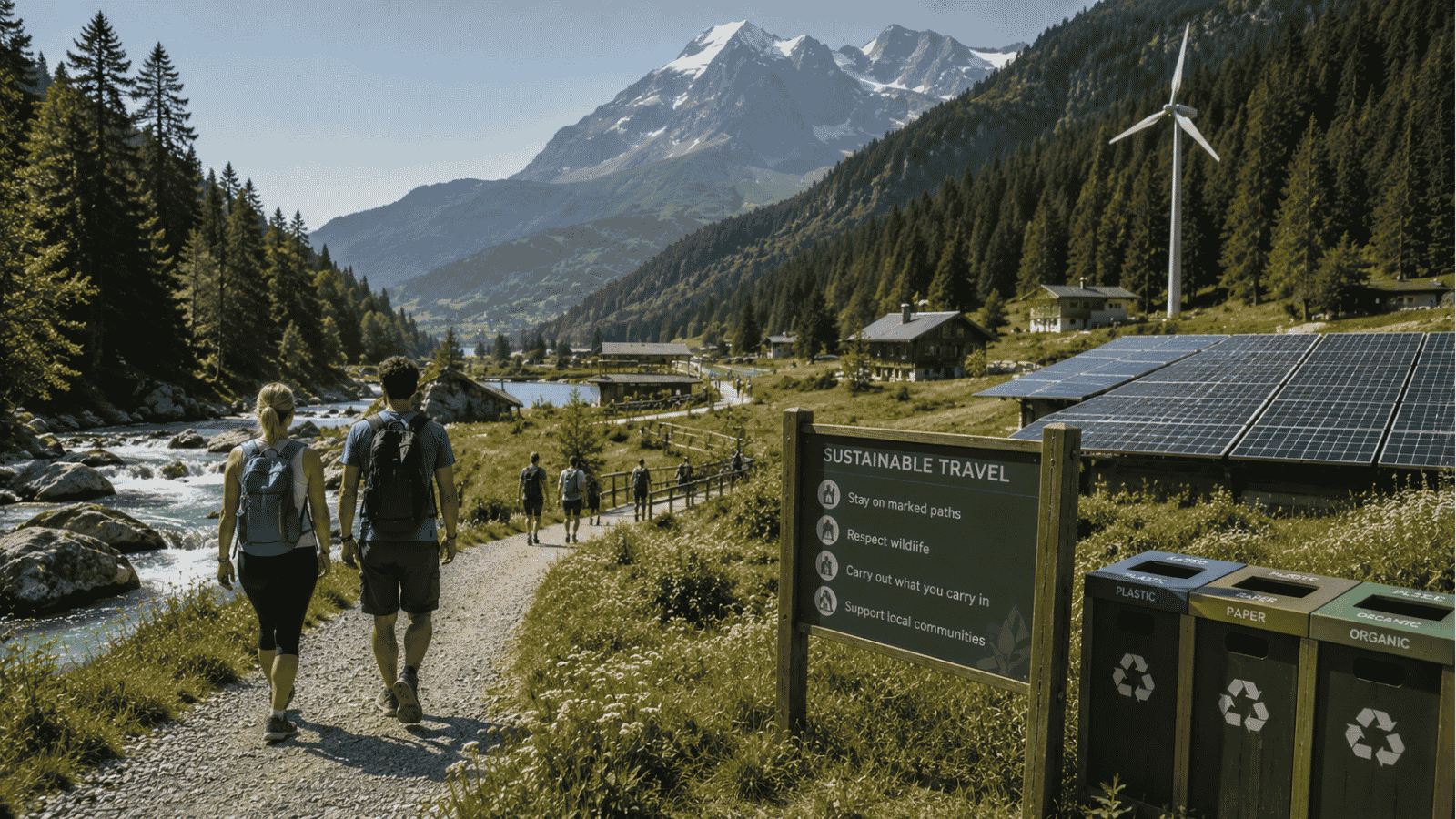
Featured destination categories
Every Guide Connects To Every Other Guide
A destination guide that stops at the border of its own topic is incomplete. Culture explains safety. Safety explains planning. Planning explains wellness. Follow the threads below and the library begins to work as a single body of knowledge rather than a shelf of separate articles.
Travel intelligence
The parent discipline. How to research, verify and interpret information about any destination on earth — the reasoning that sits underneath every guide in this library.
Start with the core framework →Travel planning
Where research becomes an itinerary. Budgeting, sequencing, booking windows and building a plan that can absorb the inevitable surprise without collapsing.
Build a plan that survives contact →Travel wellness
Vaccinations, altitude, hydration, medication, insurance and the mental load of unfamiliar places. The layer travellers under-prepare most often and regret most sharply.
Arrive in condition to enjoy it →Travel safety
Proportionate, specific, unsentimental. What the real risks are in a given destination, what reduces them, and what to do if the plan goes wrong anyway.
Understand the real risks →Culture
Customs, etiquette, language, religious observance and the unwritten rules every society assumes its visitors already know. The cheapest respect you will ever pay.
Learn the unwritten rules →Eco parks and botanical gardens
Conservation-first travel: protected landscapes, biodiversity, living plant collections and the destinations where visiting responsibly genuinely matters.
One library. Many entry points.
You can enter this ecosystem from any direction — a country you are curious about, a health question, a safety concern, a cultural misunderstanding you would rather avoid. Wherever you begin, the threads lead to the same place: a traveller who understands the destination before arriving in it.
Editorial standards
How Every Destination Guide Is Researched
A destination guide is only as useful as the process behind it. Ours is deliberately unglamorous, and we would rather describe it plainly than claim more than we can support.
Primary sources first
Entry requirements, health guidance, park regulations and safety information are traced to the issuing authority wherever such a source exists. Where we cannot verify a claim, we say so rather than repeat it with confidence we have not earned.
Local context, not borrowed opinion
Cultural guidance is written to describe how a place actually operates, not how it appears from a distance. We avoid the confident generalisation, and we prefer to explain a custom rather than simply instruct you to follow it.
Reviewed and revised
Destinations change. Visa rules shift, parks close, prices move, seasons behave unexpectedly. Guides are reviewed and updated as circumstances change, and we treat a stale page as an error rather than an inconvenience.
Time-sensitive facts are flagged
Anything that can expire — entry rules, permits, vaccination requirements, emergency numbers — is treated as provisional and should always be confirmed with the official authority before you travel. No guide, ours included, is a substitute for the issuing body.
Conservation is a constraint, not a theme
Where visiting a place responsibly requires restraint, we say so, even when the restraint is inconvenient and even when it makes for less appealing copy.
Corrections welcome
If a guide is wrong, we want to know. Readers on the ground routinely see what researchers cannot, and a correction improves the library for everyone who arrives after you. Tell our editors.
Read the standard, then hold us to it
Our full editorial approach — how we research, review, update and correct — is published openly, alongside our approach to reader data. We publish it because a guide that asks you to trust it should first explain why.
“A guide that cannot explain its sources is asking for faith, not trust.”
Destination guides FAQ
Frequently Asked Questions
Straight answers to the questions travellers ask most often before choosing where, and when, to go.
A destination guide is a structured explanation of a place — its geography, climate, history, culture, language, transport, safety, health considerations and environment — written to help you make decisions before you travel. A good guide does more than list attractions: it gives you enough understanding of how a destination works that you could navigate it sensibly even when your plan changes.
Work downwards through six levels: country, region, state or province, city, neighbourhood and finally local attractions. Country tells you whether you can enter and what it costs. Region tells you what the climate and culture are actually like. Neighbourhood tells you where to sleep. Attractions come last, because only by then do you have enough context to judge which ones deserve your time.
It depends on what has a deadline. Visas, vaccinations and permits for popular national parks can require months, and those are the constraints that decide whether a trip is possible at all. Flights and accommodation are usually flexible by comparison. Identify the longest lead time in your plan first, then work backwards from it. Our travel planning hub covers the sequencing in detail.
Rarely the peak season, and rarely the cheapest. The best time is usually the shoulder season, when weather, price, crowd levels and access are all acceptable at once rather than any one of them being perfect. Check what closes out of season, though — in some destinations the low season closes the very thing you came to see.
Ask what the specific risk is, not whether a place is "safe" in the abstract. In most destinations the statistically significant risks are road traffic, opportunistic theft and weather, not the dramatic ones that dominate headlines. Consult your government's travel advisory for the region rather than the country, read recent first-hand accounts, and see our travel safety hub for a proportionate approach.
Almost always yes, and the important question is what it excludes. Check medical evacuation limits, coverage for the specific activities you intend to do (many policies exclude altitude, diving or motorcycling), whether it pays providers directly or only reimburses you, and whether pre-existing conditions are declared. Read the exclusions before the summary. Our travel wellness hub explains what to look for.
Read every destination through the lens of your actual circumstances. A place that is wonderful for a solo traveller with time can be exhausting for a family with a toddler, and a destination that suits an adventure itinerary may frustrate a remote worker who needs reliable connectivity. Match the destination to the trip you are genuinely able to take, not the one you would like to be taking.
Mostly it requires restraint and attention. Stay longer and move less. Spend with locally owned businesses so revenue stays in the destination. Follow conservation rules even when nobody is watching. Ask before photographing people. Avoid places at moments when your presence adds pressure they cannot absorb. Our eco parks guide shows what conservation-led travel looks like in practice.
A useful minimum: twenty words of the language, the rules around dress and photography, the local expectations at a meal, the significance of any festival occurring during your visit, and a basic grasp of the last century of the country's history. That is an afternoon of reading, and it changes how you are received. Start at our culture hub.
Guides are reviewed and revised as destinations change — when entry rules shift, parks close, prices move or safety conditions alter. Even so, time-sensitive details such as visas, permits, vaccination requirements and emergency numbers should always be confirmed with the issuing authority before you travel. Our full approach is set out in the editorial policy.
If you are still choosing a destination, read travel intelligence next. If you have chosen one, move to travel planning. Then work through wellness, safety and culture before departure.
Better questions produce better journeys
Notice how few of these questions are about where to go. Almost all of them are about how to decide — which is exactly the skill that transfers from one destination to the next, and the reason this library exists at all.
“The traveller who knows what to ask never needs to be told what to see.”
The library is open
Somewhere Out There Is A Place You Are Not Yet Ready For.
That is not a warning. It is an invitation. Every destination asks something of the traveller who arrives — attention, humility, preparation, restraint — and gives back in exact proportion to what was brought. The guides in this library exist to make you ready: to help you read a place before you enter it, move through it without harming it, and leave it as intact as you found it. Choose a region. Descend to a country. Understand the season. Then go, and go well.
Research
Gather the facts that do not change with marketing.
Understand
Turn those facts into judgement you can travel on.
Respect
Leave the destination able to welcome the next traveller.
Return
Reflect, correct, and read the next place more clearly.
“Every destination rewards the traveller who arrives already listening.”